


I Worked on That System
Doug Slattery · Founder & CEO, SYBor Tech
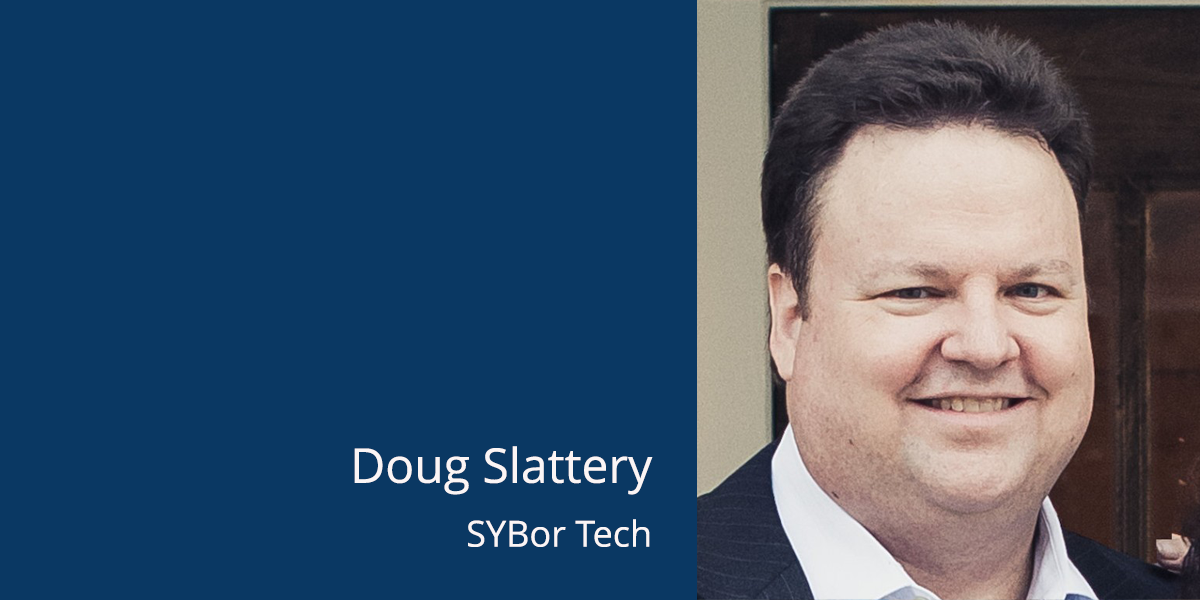
Six months after Doug Slattery left Southwest Airlines, a Southwest flight landed at the wrong airport.
He heard it on the news. And the first thing that flashed through his head was the flight planning system he’d been hired to help port from one programming language to another. Fortran to C. He wasn’t a pilot. He’d taken ground school in high school, with a science teacher who offered it to interested students, and that was the extent of his flight planning expertise.
When he finished the conversion, he turned it over to other developers on the team to verify the navigational logic. They said it looked right. Dispatch, the people responsible for deploying the software across the airline, took it from there.
“They’re very passive about the software we give them,” Slattery says. “Whether we’re making enhancements or patches or other things, they’re like, whatever, we’ll just throw it in.”
Then Southwest bought AirTran in 2010. AirTran had their own tech team, so all the contractors got let go. Slattery among them. Six months later, a Southwest flight landed at the wrong airport.
“I told that to a pilot,” Slattery says. “And he wasn’t even phased. He’s like, yeah, that happens all the time. I’m like, really? I’ve never landed at the wrong airport before.”
The official explanation was pilot error. Slattery has always wondered.
He tells that story with a kind of amused disbelief, the way someone tells a story they’ve been sitting with for years and still can’t quite believe is real. It’s also a pattern that has followed him for decades. He sees the problem, builds the fix, hands it off, and then watches from a distance to see if anyone uses it right.
Slattery grew up in Wichita, Kansas, where his father was an electrical engineer. Both of his parents had worked on the Apollo space program in the sixties and early seventies. He got to see one of the final Apollo moon launches as a kid.
“They reinforced my trajectory going into tech,” he says.
He enrolled at the University of Kansas to study electrical engineering, but the curriculum was traditional. Field theory, coils, motors, vacuum tubes. His interests ran toward electronics, semiconductors, oscilloscopes, and soldering irons. The mismatch cut short his academic career.
“I bummed around for about six months, still at home, thinking, what am I gonna do?” he says. “What I didn’t realize was that you don’t necessarily have to have a degree or a piece of paper to prove how smart you are, you know, to go after what you have a passion for.”
In 1984, he joined the Air Force. He chose it because it felt more academic than the other branches. He also wanted out of Wichita. His father had encouraged him to wait for a guaranteed job assignment, but Slattery was ready to go. He shipped off to Lackland Air Force Base for basic training and got orders to Okinawa.
His first assignment was as a fuel specialist at Kadena Air Base, supporting three squadrons of F-15s. The base also ran operations for Strategic Air Command and Military Airlift Command. And then there was the aircraft that wasn’t officially there.
“They didn’t officially have an SR-71,” Slattery says. “But yeah, you’d hear those roars and see those afterburners in the middle of the night. You’re like, yeah. That’s not a T-38.”
He changed his own trajectory by getting the word out that he knew computers and electronics. His commanding officer found out and pulled him off the flight line to work on the section’s computers in the back office. Then the commander of Pacific Air Forces, visiting from Hickam Air Force Base in Honolulu, saw what Slattery was doing and offered him a special assignment. Slattery already had orders to go to Spain for his next deployment.
Those orders were rescinded. New orders came through for Hickam.
“And it’s that moment I was like, wow, this is real,” he says.
In Honolulu, Slattery joined the Honolulu Computer Club and met a man who repaired electronic music equipment. Slattery had grown up playing piano and loved electronic music. It was, as he describes it, both sides of his brain coming together. He started subcontracting for the repair business before he even got out of the Air Force, and the owner became a mentor who taught him the hands-on electronics he’d always wanted to learn.
Eventually, the electronics got too reliable. There wasn’t enough repair work to support two people.
“Guess who had to go?” he says.
He stayed in Honolulu until 2008, working at a custom software development company where the boss ran the team like a football coach.
“He would run your ass into the ground,” Slattery says. “But at the end of the day, you could go have dinner with him and joke around. He’s like the father I didn’t have.”
From there, he moved to the Dallas area and landed at Southwest Airlines within an hour of his first interview. He worked on systems he compares to NASA’s mission control for the airline: software that communicated with the FAA, pilots, the Weather Service, and other regulatory agencies. He led a hardware refresh of over 350 computers across the company. The machine learning project he later worked on at Capital One, where he served as a tech lead on a computer vision workflow for processing loan applications, saved the company sixteen million dollars in its first year in production.
SYBor Tech started at home.
Slattery’s late wife, Anna, was a professional in the hair industry. She had trained with Vidal Sassoon and had built a reputation in the DFW area. Her dream was to own her own salon. And one of the things she asked Doug to help with was automating it: a way to check remotely whether the lights were off and the doors were locked, so she didn’t have to drive back and forth every time a stylist left for the day.
He looked for something on the market that could handle it. Nothing fit. So he decided to build it himself.
That was the beginning of SYBor Tech. The name stands for Secure Your Borders.
“I just threw it in the subject of an email one time and it just started bouncing back and forth and then it stuck,” he says.
What SYBor builds today is an IoT interoperability platform that connects smart devices across homes, buildings, and potentially cities. You walk up to your front door and the porch light turns on, the smart lock authenticates you through facial recognition, the thermostat adjusts, and you never have to drop your keys in the dark. Different manufacturers, different apps, different protocols, different ecosystems, all consolidated into one system where the devices know about each other.
But Slattery’s ambitions go beyond the front door. He describes a scenario involving his mother, who lives alone in Hot Springs Village, Arkansas, about four hours from him. If a system like SYBor’s were installed in her home, it could monitor her daily routines. If she doesn’t get up for coffee at seven in the morning the way she usually does, an automated alert could go out to her caregiver and to Slattery. If he checks in and sees she’s fallen, he could send a digital 911 signal from her home’s system, dispatching local emergency services rather than calling his own local 911 in McKinney, which would be useless. Emergency responders could assess the situation through the smart tech before they arrive. The smart door could unlock for them so they don’t have to break it down.
“That brings smart home to smart city full circle,” he says.
Right now, SYBor is running on two tracks. On the builder side, Slattery is outfitting his own new home with the full platform as a showcase. The builder, who is in the middle of constructing a fifteen-thousand-square-foot home for another client, saw what Slattery was doing and wanted SYBor’s system instead of the luxury brands.
“Screw Lutron, screw Control4,” Slattery says the builder told him. “We want our system in this home.”
The electrician wired Slattery’s new house with over a mile of Cat 6 Ethernet cable for all low-voltage systems. It came in less expensive than traditional 120-volt wiring.
On the enterprise side, a VC advisory firm has been working with SYBor for over a year on larger-scale smart city and critical infrastructure applications. The interest is there, but it hasn’t reached the people who hold the checkbooks. The enterprise sales cycle is long, and the revenue from the builder market is what keeps things moving while those conversations play out.
His current wife, meanwhile, has been his toughest product tester.
“We’re gonna have a touch panel control panel in the living room, a twelve-inch one, that’s gonna have access to all the rooms, be able to see all the cameras,” he says. “But behind it I have a little computer, an ARM processor, and it has dual displays on it. I’m like, this would be cool to have dual display.” His wife said no. “She doesn’t want that. So it’s good to have her perspective to keep me in line from what everybody else wants.”
Slattery went through the Warrior Rising veteran entrepreneur accelerator a few years ago and was invited to pitch at the Veterans Business Battle at Rice University in Houston. He’s also involved with a local veterans in business nonprofit and the Economic Development Center in the McKinney area.
His advice to founders considering the leap is direct.
“Make sure before you jump ship or you cut the umbilical cord from your J-O-B that you have a team together and you’ve got some traction going or a big war chest saved up,” he says. “I did not know how long it was going to be before I would be able to regularly, continuously support myself. And I still can’t. There’s ups and downs with the cash flow.”
He also tells founders to learn both sides of the business. If they’re strong on the product side, learn the business side. If they’re strong on business, learn the product.
“Educate yourself not just on what you’re good at,” he says. “Know it top down, left and right, inside and out. I didn’t know that before I jumped ship. Once I did, I spent the time from my day job learning about business and then I realized how much I didn’t know and maybe should have stayed on or held on to that job a little bit longer.”
Anna passed away going on four years ago. Slattery is building a new home now with his wife, scrambling to make sure the lights actually work before they move in. He’s still running the company that started because Anna asked him for help. The salon automation she needed is now an IoT platform with a builder ready to put it in a mansion and a VC firm working the enterprise pipeline.
“And they’re your most critical customers, your family,” he says.
Doug Slattery is the Founder and CEO of SYBor Tech, based in McKinney, Texas. An Air Force veteran, Slattery served at Kadena Air Base in Okinawa and Hickam Air Force Base in Honolulu before building a career in software development and machine learning at companies including Southwest Airlines and Capital One. SYBor Tech develops an IoT interoperability platform for smart home, smart building, and smart city applications. Slattery is a Warrior Rising Hall of Fame member and Veterans Business Battle participant at Rice University.